Dental clinic · Survey-informed concept
From uncertain advertising to a booked consultation.
The owner described Facebook and Messenger inquiries, occasional boosted posts, and AI-assisted social content without a clear view of what produced useful results. This project turns that feedback into one focused patient journey.
Concept before implementation · No business results claimed
Patient journey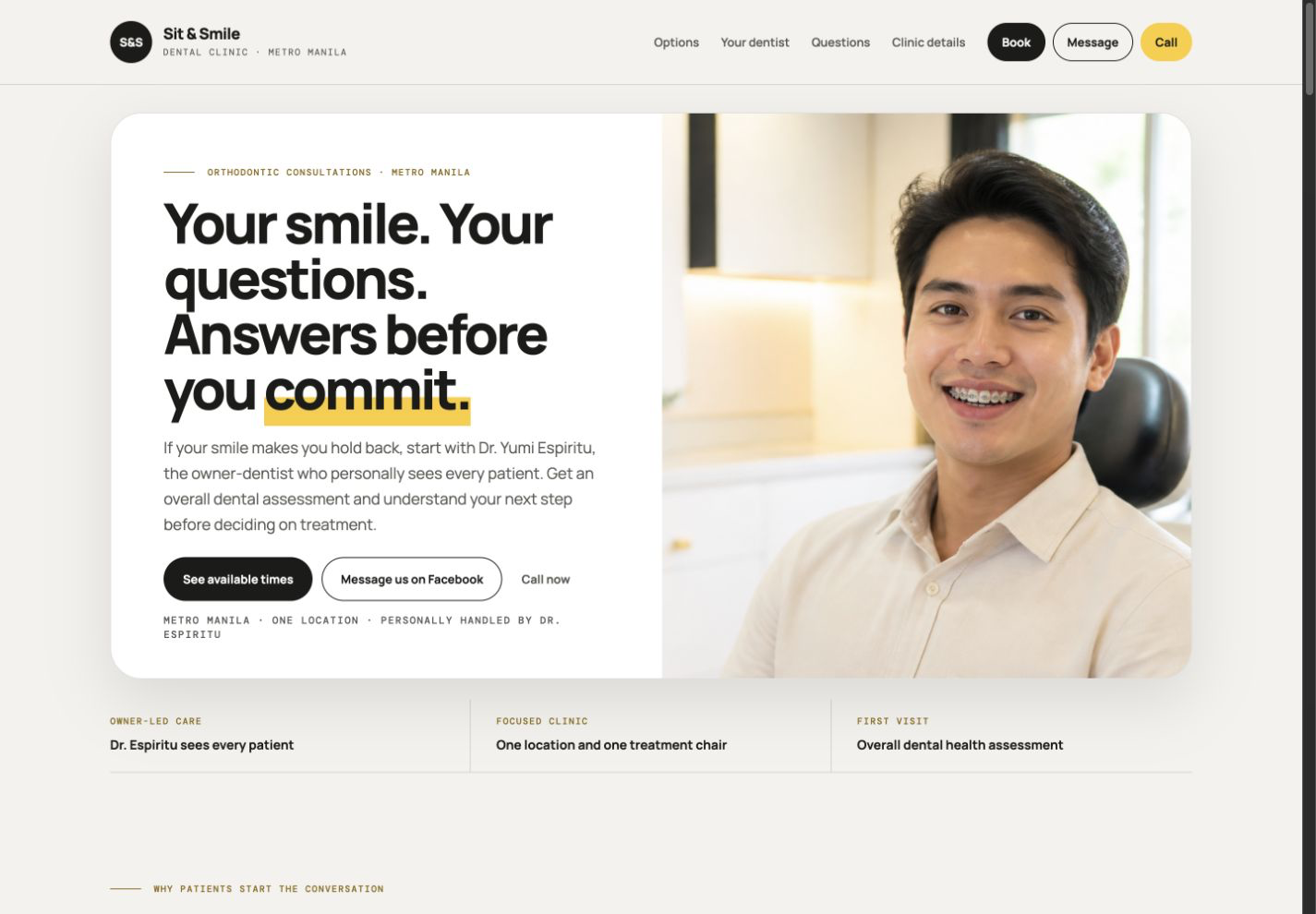
What appeared after the survey
The clinic is doing marketing, but the path to an appointment is difficult to see.
The recommendation did not start with a generic funnel package. It came from the clinic's own description of how inquiries arrive, who responds, and where prospective patients tend to fall away.
The practical risk
A message can arrive while the dentist is treating a patient.
The reply may need to wait. By the time the dentist is free, the prospective patient may have contacted another clinic or lost interest. That makes it hard to tell whether the marketing failed or the inquiry did not reach a clear next step.
The proposed first build
One treatment website connected to a consultation calendar.
The page explains the approved basics, lets the patient choose an available time, and records the source and appointment outcome so the clinic can judge its marketing more clearly.
Interactive system explanation
Select a step to see both sides of the journey.
The patient experiences a simple path. The clinic gets a connected record behind it. Select any stage below.
What the patient sees
A clear invitation to learn more
The post or advertisement focuses on one treatment and leads to a page where the next step is obvious. It does not ask the patient to untangle the entire clinic menu inside Messenger.
What the clinic sees
The source of the visit
The clinic can identify whether the visit came from a regular post, boosted post, referral link, or structured campaign instead of treating every Messenger thread as an isolated conversation.
This describes a buildable HighLevel workflow. Exact messages, calendar rules, tracking, consent, and hand-off conditions would be approved with the clinic before launch.
Patient-facing prototype
This project explanation is not the funnel.
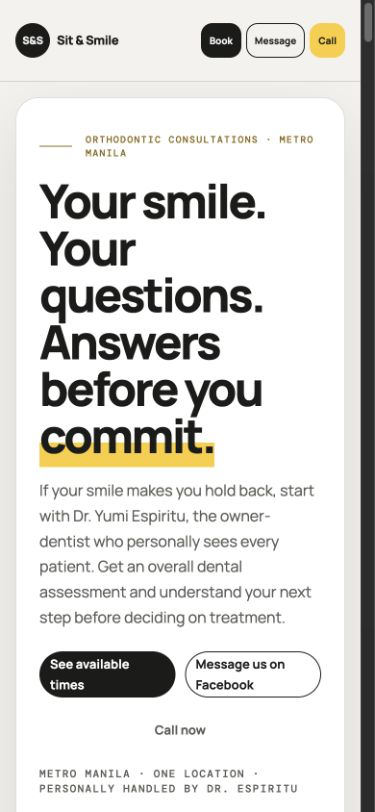
The prototype shows the website a prospective orthodontic patient would experience. It uses a separate dental visual identity, answers approved non-clinical questions, and ends in a consultation calendar rather than a Messenger booking conversation.
Your smile. Your questions. Answers before you commit.
The mockups above show the patient website, clinic trust sections, and the reserved space for the clinic's real consultation calendar.
How this could enter the clinic
Build privately, start small, then review.
The proposed system does not require the clinic to abandon its current process on day one.
Build and test privately
Create the page, calendar, messages, tracking, and clinic hand-off rules. Test sample journeys before any patient sees them.
Launch with one treatment
Start with one service the clinic wants to grow. Existing Facebook, phone, and SMS channels can remain available during the transition.
Review weekly, then monthly
Check the first month closely. Once stable, review the journey monthly and improve it before increasing advertising spend.
Why advertising comes after the connected journey
A boosted post is not the same as a structured Meta campaign. Before spending more, the clinic should be able to see the source, consultation booking, and appointment outcome clearly.
Responsibility boundaries
Technology organizes the path. People remain responsible for care.
Dentist and clinic team
Clinical assessment, diagnosis, treatment decisions, exact or case-specific pricing, sensitive conversations, and exceptions.
Pre-set routine steps
Page forms, calendar booking, confirmations, reminders, source recording, staff notifications, and stopping the sequence when appropriate.
Quiet support for staff
Drafting from approved clinic answers and summarizing context. No diagnosis, clinical advice, or unsupervised treatment recommendation.